YOU ARE ACCESSING THE LCARS COMMAND INTERFACE - TECHNICAL DATABANK
Universal Translator
This is a computer program employed for communication among persons who speak different languages. The universal translator performs a pattern analysis of an unknown language based on a variety of criteria in order to generate a translation matrix.<
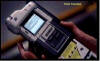
Early Enterprise NX-01Translator
The universal translator, although explicitly shown as a hand-held device only in TOS: "Metamorphosis", must have been omnipresent already at the time of TOS. After all, we can't expect everyone in the galaxy to speak English.
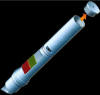
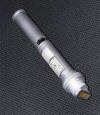
Standard Starfleet Translators
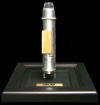
Gorn Translator
It is obvious that the universal translator will never work the way shown in Star Trek. First of all, an exactly simultaneous translation is definitely impossible, considering that grammar is significantly different for human languages, let alone alien forms of communication. So a delay of up to several seconds until the end of the respective sentence is required before it can be properly translated. Secondly, the translator voice would be superimposed to the original voice and, if both are located in the same room, result in a confusing babble. The original voice could be filtered out, however, in this case the translated version could not have the same spectrum, and Picard might sound like Janeway. Thirdly, the universal translator could not decipher a language based on the knowledge of only a few sentences. The episodes TNG: "Darmok" and DS9: "Sanctuary", where the universal translator fails or adapts only gradually, are remarkably realistic in this respect, as well as several Enterprise episodes.
The artificial voice created by the translator would be superimposed to the original voice and, if both are located in the same room, the result would be a confusing babble. The original voice could be dampened or filtered out. However, in this case the translated version could not have the same spectrum (maybe it would work if Picard's voice would be transposed to sound like Janeway ;-)). We may think of some very sophisticated filtering algorithms that could really largely eliminate the original, as experiments show that traffic noise may be canceled already today. This, however, would work only in a well-defined environment in which certain sounds come from certain directions, or it would require to have microphones and speakers everywhere in the room.
Enterprise shows similar situations in "Fight or Flight" or "Civilization", for example, but in all instances the translation is still too fast. The knowledge of the syntax of many languages may help an advanced system to learn new languages faster, as it is proven by human learning. But the actual problem is not with the algorithms but rather with the standard vocabulary, of which a certain percentage must have been recorded until the translator can make reliable translations.




Last edited by Adge - June 2004

This is a computer program employed for communication among persons who speak different languages. The universal translator performs a pattern analysis of an unknown language based on a variety of criteria in order to generate a translation matrix.<
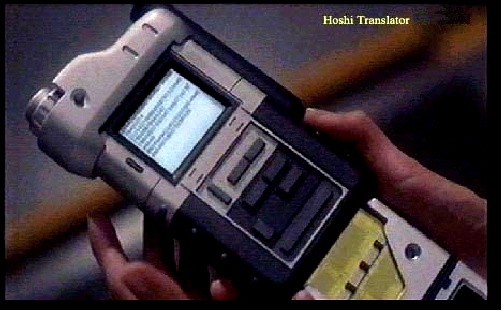
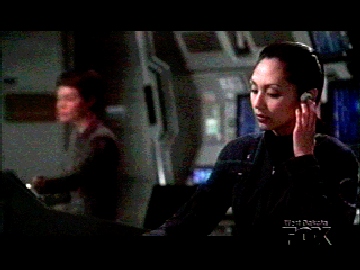
Early Enterprise NX-01Translator
The universal translator, although explicitly shown as a hand-held device only in TOS: "Metamorphosis", must have been omnipresent already at the time of TOS. After all, we can't expect everyone in the galaxy to speak English.
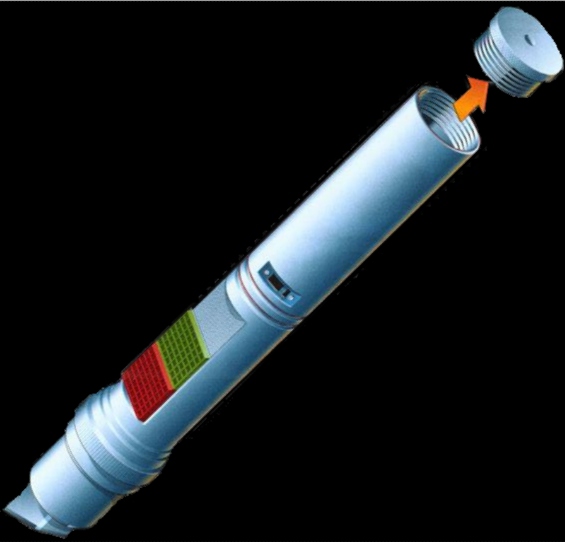
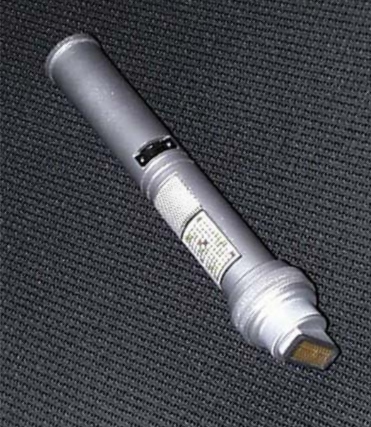
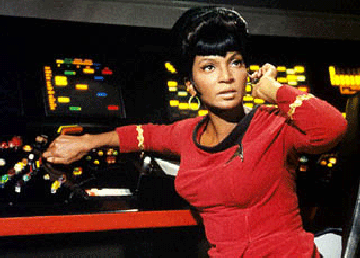
Standard Starfleet Translators
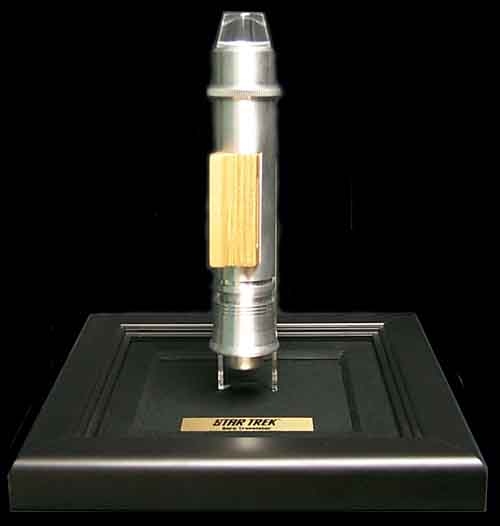
Gorn Translator
It is obvious that the universal translator will never work the way shown in Star Trek. First of all, an exactly simultaneous translation is definitely impossible, considering that grammar is significantly different for human languages, let alone alien forms of communication. So a delay of up to several seconds until the end of the respective sentence is required before it can be properly translated. Secondly, the translator voice would be superimposed to the original voice and, if both are located in the same room, result in a confusing babble. The original voice could be filtered out, however, in this case the translated version could not have the same spectrum, and Picard might sound like Janeway. Thirdly, the universal translator could not decipher a language based on the knowledge of only a few sentences. The episodes TNG: "Darmok" and DS9: "Sanctuary", where the universal translator fails or adapts only gradually, are remarkably realistic in this respect, as well as several Enterprise episodes.
The artificial voice created by the translator would be superimposed to the original voice and, if both are located in the same room, the result would be a confusing babble. The original voice could be dampened or filtered out. However, in this case the translated version could not have the same spectrum (maybe it would work if Picard's voice would be transposed to sound like Janeway ;-)). We may think of some very sophisticated filtering algorithms that could really largely eliminate the original, as experiments show that traffic noise may be canceled already today. This, however, would work only in a well-defined environment in which certain sounds come from certain directions, or it would require to have microphones and speakers everywhere in the room.
Enterprise shows similar situations in "Fight or Flight" or "Civilization", for example, but in all instances the translation is still too fast. The knowledge of the syntax of many languages may help an advanced system to learn new languages faster, as it is proven by human learning. But the actual problem is not with the algorithms but rather with the standard vocabulary, of which a certain percentage must have been recorded until the translator can make reliable translations.
Last edited by Adge - June 2004