YOU ARE ACCESSING THE LCARS COMMAND INTERFACE - TECHNICAL DATABANK
Probes
Starfleet standard general use of probes, is divided into nine classes, arranged according to sensor types, power, and performance ratings. The features common to all nine are spacecraft frames of gamma moulded duranium-tritanium and pressure-bonded lufium boronate, with certain sensor windows of triple layered transparent aluminium. Sensors not utilizing the windows are affixed through various methods, from surface blending with the hull material to imbedding the active detectors within the hull itself.
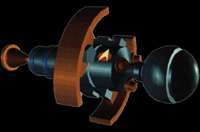
All nine classes are equipped with a standard suite of instruments to detect and analyzes all normal EM and subspace bands, organic and inorganic chemical compounds, atmospheric constituents, and mechanical force properties. While all are capable of at least surviving a powered atmospheric entry, only three are designed to function for extended periods of aerial manoeuvring and soft landing. Many of the probes also include varying degrees of tele-robotic operation capabilities to permit real time control and piloting of the probe. This permits the investigation team to remain on board the Starship while exploring what might otherwise be a dangerous hostile or otherwise inaccessible environment.
Different probe types are shown below.
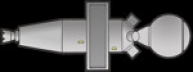
Class I Sensor Probe
Range: 200,000 km.
Delta-v limit: 0.5c.
Power plant: Vectored deuterium micro-fusion propulsion.
Sensors: Full EM/Subspace and interstellar chemistry pallet for in-space applications.
Telemetry: 12,500 channels at 12 megawatts.
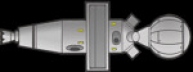
Class II Sensor Probe (Modified Class I)
Range: 400,000 km.
Delta-v limit: 0.65c.
Power plant: Vectored deuterium micro-fusion propulsion, with extended deuterium fuel supply.
Sensors: Same instrumentation as a Class I Probe, with addition of enhanced long-range particle and field detectors and imaging system.
Telemetry: 15,650 channels at 20 megawatts.
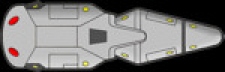
Class III Planetary Probe
Range: 1,200,000 km.
Delta-v limit: 0.65c.
Power plant: Vectored deuterium micro-fusion propulsion.
Sensors: Terrestrial and gas giant sensor pallet with material sample and return capability, and an on-board chemical analysis sub-module.
Telemetry: 13,250 channels at approximately 15 megawatts.
Additional Data: Limited SIF hull reinforcement. Full range of terrestrial soft landing to subsurface penetration missions. Gas giant atmosphere missions survivable to 450 bar pressure. Limited terrestrial loiter time.
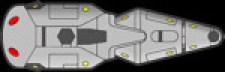
Class IV Stellar Encounter Probe (Modified Class III)
Range: 3,500,000 km.
Delta-v limit: 0.60c.
Power plant: Vectored deuterium micro-fusion propulsion supplemented with continuum driver coil, and an extended maneuvering deuterium supply.
Sensors: Triply redundant stellar fields and particles detectors, stellar atmosphere analysis suite.
Telemetry: 9,780 channels at 65 megawatts.
Additional Data: Six ejectable and survivable radiation flux sub-probes. Deployable for non-stellar energy phenomena.
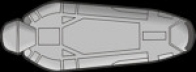
Class V Medium-Range Reconnaissance Probe
Range: 43,000,000,000 km.
Delta-v limit: Warp 2.
Power plant: Dual-mode matter / antimatter engine. Extended duration at sub-light, and limited duration at warp.
Sensors: Extended passive data-gathering and recording systems, with full autonomous mission execution and return system.
Telemetry: 6,320 channels at 2.5 megawatts.
Additional Data: Planetary atmosphere entry and soft landing capability. Low observability coatings and hull materials. Can be modified for tactical applications with addition of custom sensor countermeasure package.
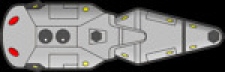
Class VI Communication Relay / Emergency Beacon (Modified Class III)
Range: 43,000,000,000 km.
Delta-v limit: 0.8c.
Power plant: Micro fusion engine with high output MHD power tap.
Sensors: Standard pallet.
Telemetry and Communication: 9,270 channel RF and subspace transceiver operation at 350 megawatts peak radiated power. 360 Omni antenna coverage, 0.0001 arc-second high-gain antenna pointing resolution.
Additional Data: Extended deuterium supply for transceiver power generation and planetary orbit plane changes.
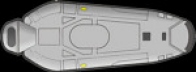
Class VII Remote Culture Study Probe (Modified Class V)
Range: 450,000,000 km.
Delta-v limit: Warp 1.5.
Power plant: Dual-mode matter / antimatter engine.
Sensors: Passive data gathering system plus subspace transceiver.
Telemetry: 1,050 channels at 0.5 megawatts.
Additional Data: Applicable to civilizations up to technology level III. Low observability coatings and hull materials. Maximum loiter time: 3.5 months. Low-impact molecular self-destruct package tied to anti-tamper detectors.
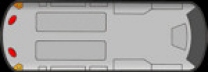
Class VIII Medium-Range Multimission Warp Probe (Modified Photon Torpedo casing)
Range: 120 light years.
Delta-v limit: Warp 9.
Power plant: Matter / antimatter warp field sustainer engine. Duration 6.5 hours at warp 9. MHD power supply tap for sensors and subspace transceiver.
Sensors: Standard pallet plus mission-specific modules.
Telemetry: 4,550 channels at 300 megawatts.
Additional Data: Applications vary from galactic particles and fields research to early-warning reconnaissance missions.
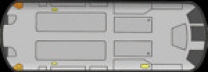
Class IX Long-Range Multi-mission Warp Probe (Modified Photon Torpedo casing)
Range: 760 light years.
Delta-v limit: Warp 9.
Power plant: Matter / antimatter warp field sustainer engine. Duration 12 hours at warp 9. Extended fuel supply for Warp 8 maximum flight duration of fourteen days.
Sensors: Standard pallet plus mission-specific modules.
Telemetry: 6,500 channels at 230 megawatts.
Additional Data: Limited payload capacity. Isolinear memory storage of 3,400 kilo quads. Fifty-channel transponder echo. Typical application is emergency log-message capsule on homing trajectory to nearest star base or known Starfleet vessel position.
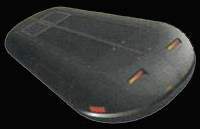
Atmospheric probe
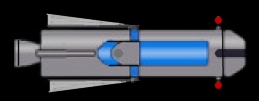
The Defiant was trapped inside a gas giant's atmosphere in DS9: "Starship Down", this type of probe was modified and used to destroy a Jem'Hadar attack ship. I maybe a variation of the Class 3 type in a new casing?
Egg Type
An instrumented sensor probe, designed by Dr. Paul Stubbs to record the decay of neutronium expelled during a stellar explosion.
Dr. Stubbs, who nicknamed his brainchild "the Egg," worked on it for twenty years before successfully launching it from the Enterprise-D at the Kavis Alpha Sector in 2366.
The full-scale egg prop was a modification of the virus containment device originally built for TNG "The Child". TNG "Evolution" ; Star Trek Encyclopedia
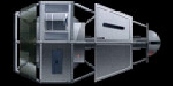
Launching the Probes.
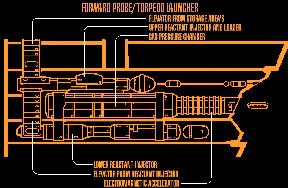
Federation Interface Probe
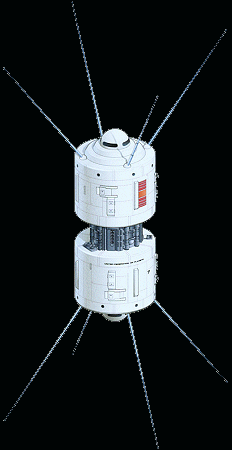
This is a Robotic device that uses remote telepresence technology to permit a person to work in hazardous environments while remaining at a safer location. In 2370,
a interface probe was sent into the U.S.S. Raman, allowing Geordi La Forge to see and feel his way around the ship with the assistance of the interface unit.
TNG "Interface" ; Star Trek Encyclopedia
Federation Multispatial Probe
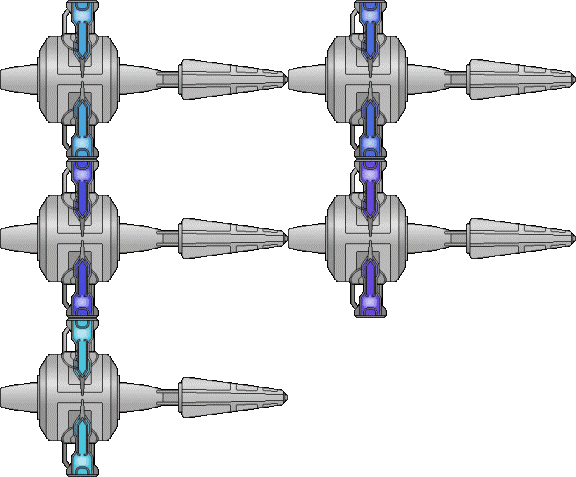
Autonomous remote sensing device built by the crew of the Voyager in 2375.
The probe was equipped with Borg shielding technology that successfully protected the probe even when it ventured
into the atmosphere of a gas giant. VOY "Extreme Risk" ; Star Trek Encyclopedia
Some Images from: http://www.ex-astris-scientia.org/


Last edited by Adge - November 2004

Starfleet standard general use of probes, is divided into nine classes, arranged according to sensor types, power, and performance ratings. The features common to all nine are spacecraft frames of gamma moulded duranium-tritanium and pressure-bonded lufium boronate, with certain sensor windows of triple layered transparent aluminium. Sensors not utilizing the windows are affixed through various methods, from surface blending with the hull material to imbedding the active detectors within the hull itself.
All nine classes are equipped with a standard suite of instruments to detect and analyzes all normal EM and subspace bands, organic and inorganic chemical compounds, atmospheric constituents, and mechanical force properties. While all are capable of at least surviving a powered atmospheric entry, only three are designed to function for extended periods of aerial manoeuvring and soft landing. Many of the probes also include varying degrees of tele-robotic operation capabilities to permit real time control and piloting of the probe. This permits the investigation team to remain on board the Starship while exploring what might otherwise be a dangerous hostile or otherwise inaccessible environment.
Different probe types are shown below.
Class I Sensor Probe
Range: 200,000 km.
Delta-v limit: 0.5c.
Power plant: Vectored deuterium micro-fusion propulsion.
Sensors: Full EM/Subspace and interstellar chemistry pallet for in-space applications.
Telemetry: 12,500 channels at 12 megawatts.
Class II Sensor Probe (Modified Class I)
Range: 400,000 km.
Delta-v limit: 0.65c.
Power plant: Vectored deuterium micro-fusion propulsion, with extended deuterium fuel supply.
Sensors: Same instrumentation as a Class I Probe, with addition of enhanced long-range particle and field detectors and imaging system.
Telemetry: 15,650 channels at 20 megawatts.
Class III Planetary Probe
Range: 1,200,000 km.
Delta-v limit: 0.65c.
Power plant: Vectored deuterium micro-fusion propulsion.
Sensors: Terrestrial and gas giant sensor pallet with material sample and return capability, and an on-board chemical analysis sub-module.
Telemetry: 13,250 channels at approximately 15 megawatts.
Additional Data: Limited SIF hull reinforcement. Full range of terrestrial soft landing to subsurface penetration missions. Gas giant atmosphere missions survivable to 450 bar pressure. Limited terrestrial loiter time.
Class IV Stellar Encounter Probe (Modified Class III)
Range: 3,500,000 km.
Delta-v limit: 0.60c.
Power plant: Vectored deuterium micro-fusion propulsion supplemented with continuum driver coil, and an extended maneuvering deuterium supply.
Sensors: Triply redundant stellar fields and particles detectors, stellar atmosphere analysis suite.
Telemetry: 9,780 channels at 65 megawatts.
Additional Data: Six ejectable and survivable radiation flux sub-probes. Deployable for non-stellar energy phenomena.
Class V Medium-Range Reconnaissance Probe
Range: 43,000,000,000 km.
Delta-v limit: Warp 2.
Power plant: Dual-mode matter / antimatter engine. Extended duration at sub-light, and limited duration at warp.
Sensors: Extended passive data-gathering and recording systems, with full autonomous mission execution and return system.
Telemetry: 6,320 channels at 2.5 megawatts.
Additional Data: Planetary atmosphere entry and soft landing capability. Low observability coatings and hull materials. Can be modified for tactical applications with addition of custom sensor countermeasure package.
Class VI Communication Relay / Emergency Beacon (Modified Class III)
Range: 43,000,000,000 km.
Delta-v limit: 0.8c.
Power plant: Micro fusion engine with high output MHD power tap.
Sensors: Standard pallet.
Telemetry and Communication: 9,270 channel RF and subspace transceiver operation at 350 megawatts peak radiated power. 360 Omni antenna coverage, 0.0001 arc-second high-gain antenna pointing resolution.
Additional Data: Extended deuterium supply for transceiver power generation and planetary orbit plane changes.
Class VII Remote Culture Study Probe (Modified Class V)
Range: 450,000,000 km.
Delta-v limit: Warp 1.5.
Power plant: Dual-mode matter / antimatter engine.
Sensors: Passive data gathering system plus subspace transceiver.
Telemetry: 1,050 channels at 0.5 megawatts.
Additional Data: Applicable to civilizations up to technology level III. Low observability coatings and hull materials. Maximum loiter time: 3.5 months. Low-impact molecular self-destruct package tied to anti-tamper detectors.
Class VIII Medium-Range Multimission Warp Probe (Modified Photon Torpedo casing)
Range: 120 light years.
Delta-v limit: Warp 9.
Power plant: Matter / antimatter warp field sustainer engine. Duration 6.5 hours at warp 9. MHD power supply tap for sensors and subspace transceiver.
Sensors: Standard pallet plus mission-specific modules.
Telemetry: 4,550 channels at 300 megawatts.
Additional Data: Applications vary from galactic particles and fields research to early-warning reconnaissance missions.
Class IX Long-Range Multi-mission Warp Probe (Modified Photon Torpedo casing)
Range: 760 light years.
Delta-v limit: Warp 9.
Power plant: Matter / antimatter warp field sustainer engine. Duration 12 hours at warp 9. Extended fuel supply for Warp 8 maximum flight duration of fourteen days.
Sensors: Standard pallet plus mission-specific modules.
Telemetry: 6,500 channels at 230 megawatts.
Additional Data: Limited payload capacity. Isolinear memory storage of 3,400 kilo quads. Fifty-channel transponder echo. Typical application is emergency log-message capsule on homing trajectory to nearest star base or known Starfleet vessel position.
Atmospheric probe
The Defiant was trapped inside a gas giant's atmosphere in DS9: "Starship Down", this type of probe was modified and used to destroy a Jem'Hadar attack ship. I maybe a variation of the Class 3 type in a new casing?
Egg Type
An instrumented sensor probe, designed by Dr. Paul Stubbs to record the decay of neutronium expelled during a stellar explosion.
Dr. Stubbs, who nicknamed his brainchild "the Egg," worked on it for twenty years before successfully launching it from the Enterprise-D at the Kavis Alpha Sector in 2366.
The full-scale egg prop was a modification of the virus containment device originally built for TNG "The Child". TNG "Evolution" ; Star Trek Encyclopedia
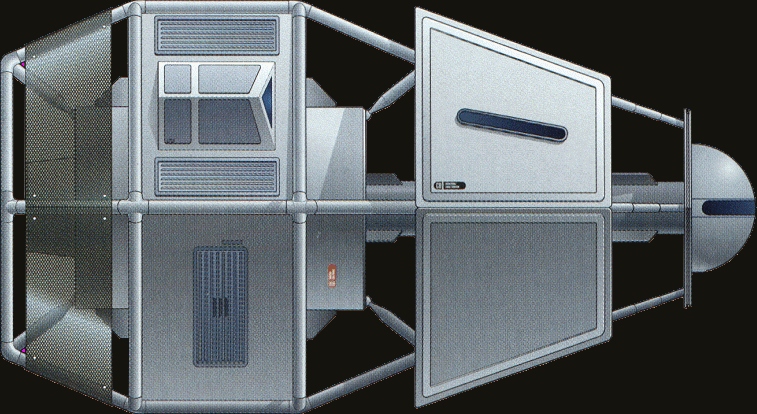
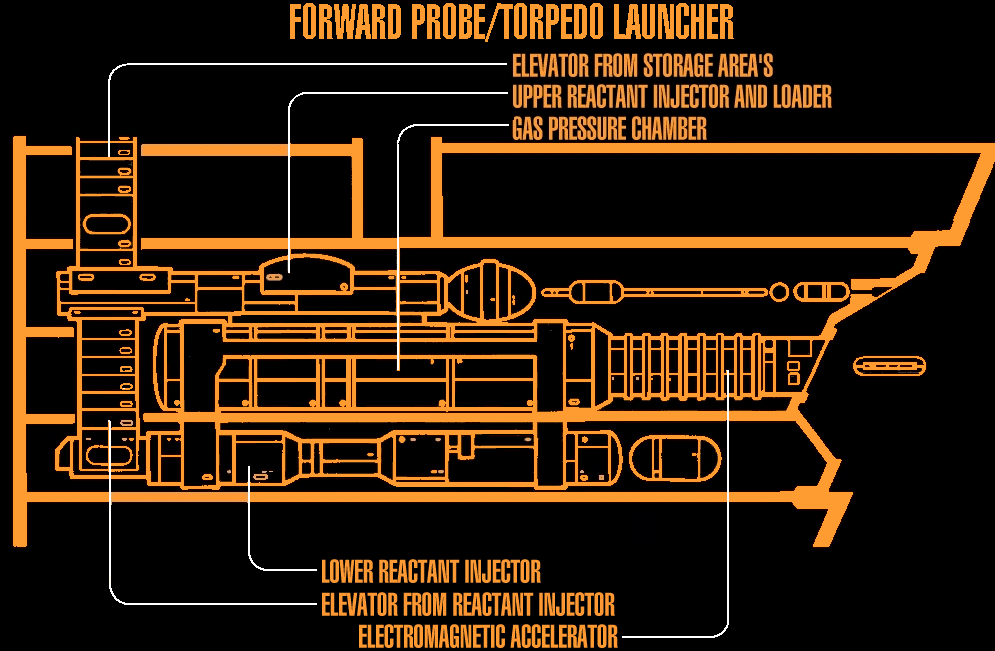
Launching the Probes.
Federation Interface Probe
This is a Robotic device that uses remote telepresence technology to permit a person to work in hazardous environments while remaining at a safer location. In 2370,
a interface probe was sent into the U.S.S. Raman, allowing Geordi La Forge to see and feel his way around the ship with the assistance of the interface unit.
TNG "Interface" ; Star Trek Encyclopedia
Federation Multispatial Probe
Autonomous remote sensing device built by the crew of the Voyager in 2375.
The probe was equipped with Borg shielding technology that successfully protected the probe even when it ventured
into the atmosphere of a gas giant. VOY "Extreme Risk" ; Star Trek Encyclopedia
Some Images from: http://www.ex-astris-scientia.org/
Last edited by Adge - November 2004